- 1994
Three cavers follow a draught of air into the painted chambers on 18 December. The cave is closed within weeks.
- 2014
UNESCO inscribes the original cave on the World Heritage List on 22 June. It stays shut.
- 2015
The reconstruction opens on 25 April, ten kilometres away and built from laser surveys of the real thing.
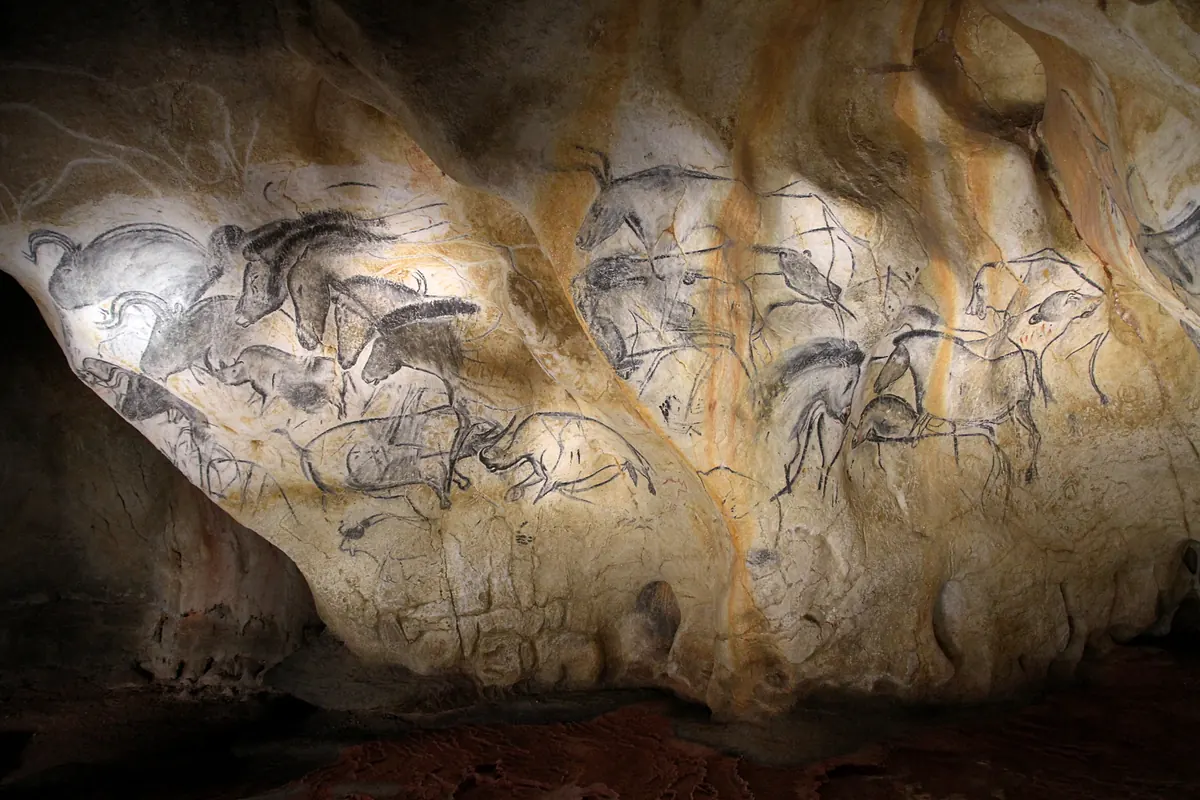
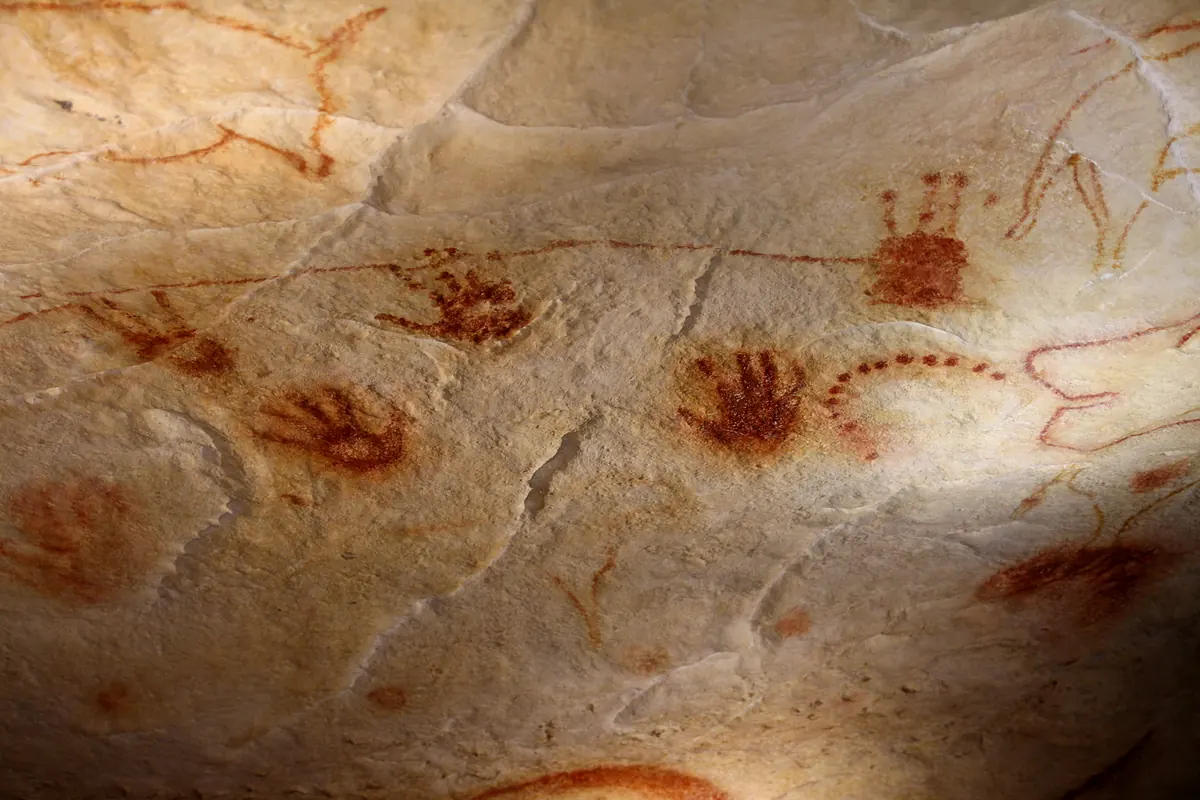
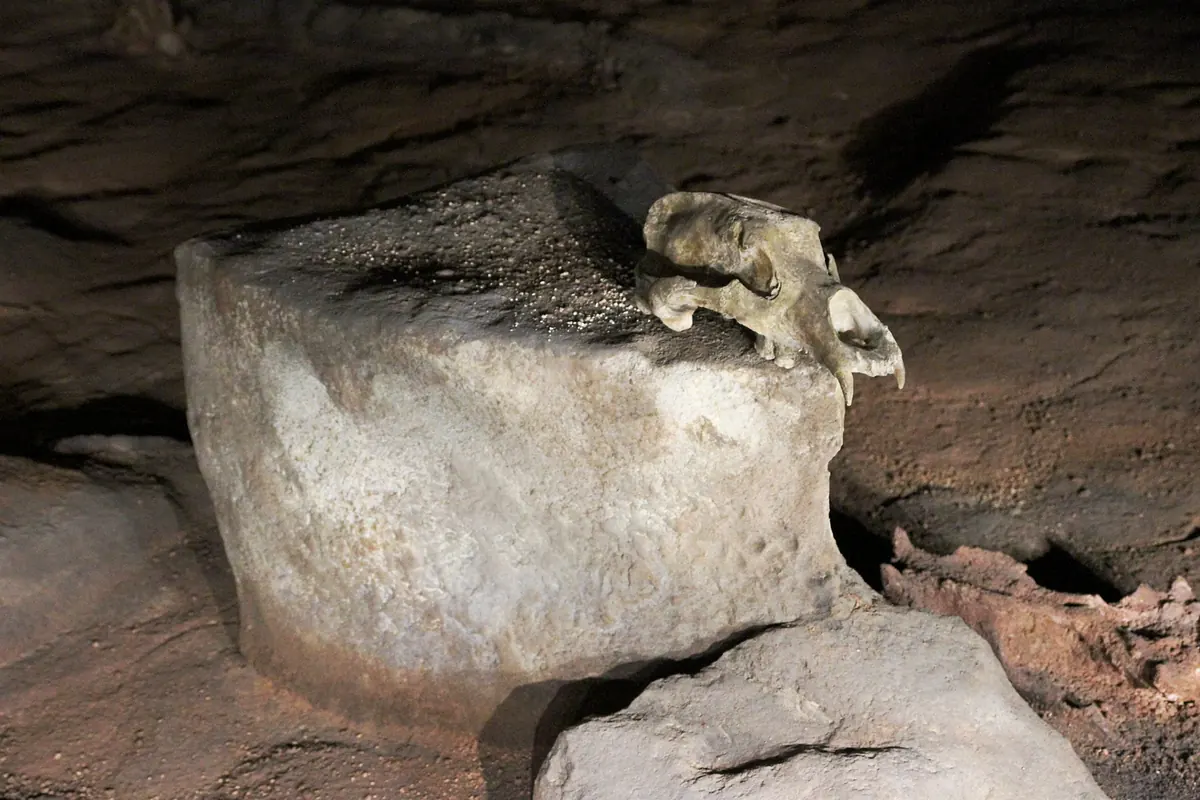
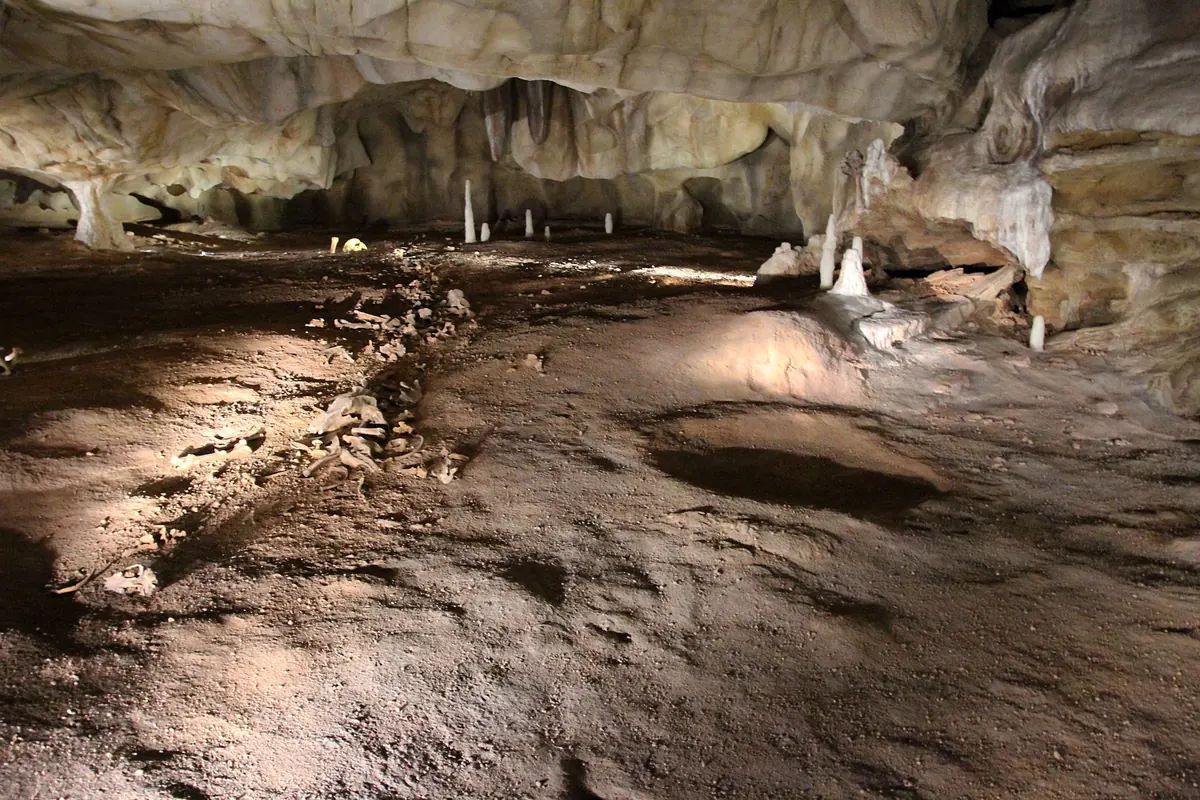
On 18 December 1994 three cavers — Jean-Marie Chauvet, Éliette Brunel-Deschamps and Christian Hillaire — squeezed through a draught of air in a cliff above the Ardèche and found a gallery no one had entered for tens of thousands of years. The floor still held bear hollows. The walls held hundreds of animals drawn in charcoal and red ochre.
The cave was sealed almost immediately and has never opened to the public. Its air, its floor and its pigment are too fragile to share. In 2014 UNESCO inscribed the original cave on the World Heritage List, and it remains shut.
What you can walk into is here, ten kilometres away above Vallon-Pont-d'Arc. Grotte Chauvet 2 reproduces the painted chambers at full size across 8,180 m² of moulded rock, the largest decorated cave replica anywhere. The panels were copied from laser surveys of the original, down to the grain of the wall and the smudge of a palm.
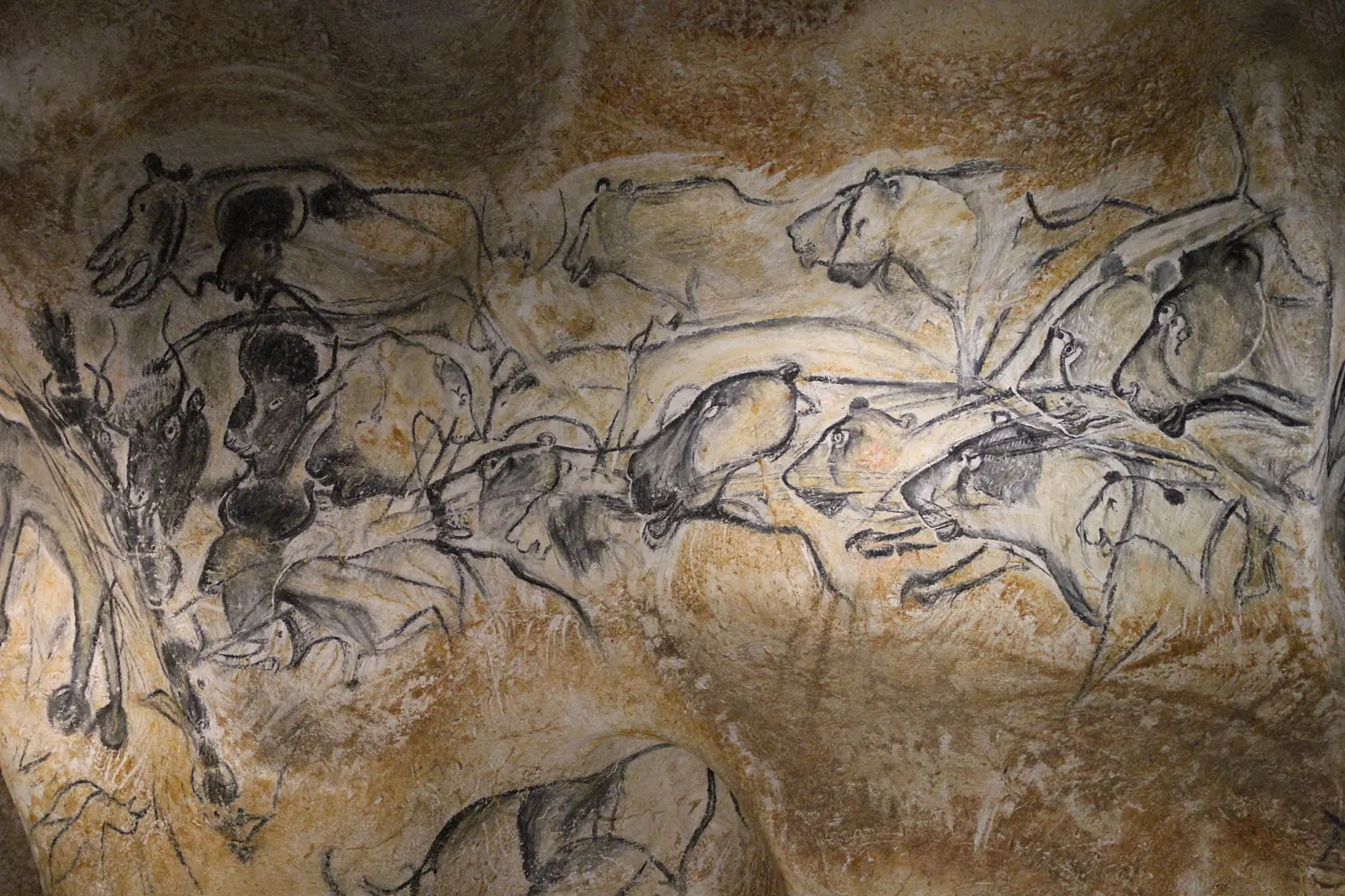
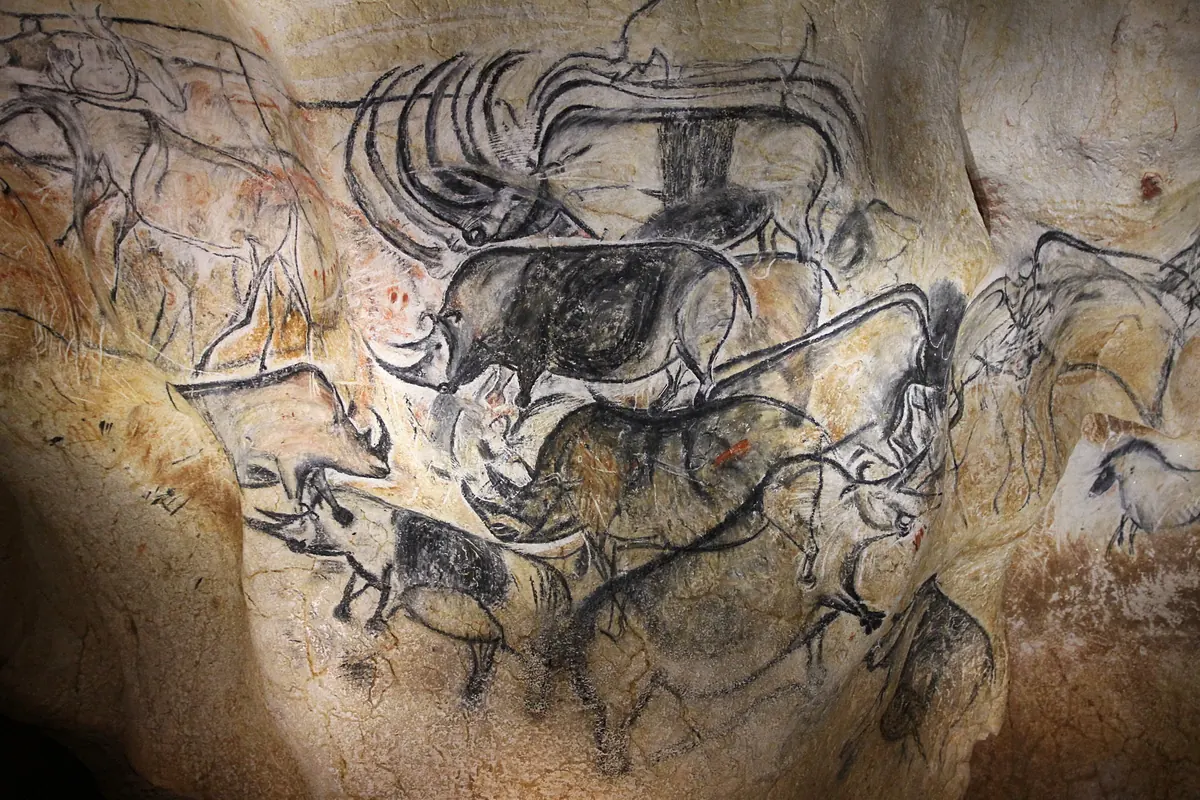
You get lions with their ears flat in a hunt, a herd of rhinos, bears, a leopard, an owl turning its head. At least thirteen species, many of them predators that almost never appear in Ice Age art. The oldest charcoal here has been dated to roughly 36,000 years ago.